





Recycled material

Contents |
[edit] Waste hierarchy
The waste hierarchy (sometimes simplified as 'reduce, re-use, recycle') sets out an order of preference for actions to reduce and manage waste. The overall aim of the hierarchy is to generate the minimum waste possible by using every material in every way possible. The most preferable option is 'prevention', at the top of the hierarchy with the least preferable 'disposal' at the bottom.
The waste hierarchy illustrated below is from the Defra 2011 publication.

[edit] Recycling
A recycled material is one that is adapted or transferred to a new use after its former use has been brought to an end. The new use may be similar to the former use (e.g recycled bricks used in new construction work) or it may be completely different, e.g steel which was once a universal column or beam recycled into automobile panels.
Recycling can help make a positive environmental impact on the planet. It saves resources, reduces waste, minimises air and water pollution and, because fewer, new resources are consumed for manufacture, it reduces carbon emissions.
A building may be deconstructed if it has reached the end of its life or is deemed no longer to be useful. In either case, it may not mean that the building can no longer serve its original function, rather, economics have dictated that a new building may bring more financial returns or a greater general benefits. In either case, deconstructing the building may yield a rich harvest of materials that can be recycled, depending on the original construction technique. Metals can be recycled relatively easily, bricks, roof tiles and roof slates can be reused, but wood if it has been fastened excessively with nails or strong adhesive can be very difficult to remove without damage. (Wood fragments can be broken down into strands to make new structural timber components such as laminated veneer lumber (LVL)).
Buildings can be designed for deconstruction, ensuring that it is as easy as possible to recycle or re-use their component parts. For more information see: Design for deconstruction.
Materials that can be directly recycled include metals (especially aluminium and steel), glass, paper, cardboard, plastics, electronics, batteries, textiles and tyres. A more indirect form of recycling is the composting or other conversion of biodegradable waste e.g food and garden waste.
Standards offer recycling guidance such as ISO 15270:2008 for plastic waste and ISO 14001:2015 for environmental management control of recycling.
In recent years, general recycling has been greatly facilitated by recycling centres that allow the public to discard their waste responsibly rather than just throwing it into the rubbish to end up in landfill. Household collections also encourage recycling of a host of recyclable materials including paper, cardboard, glass, plastic packaging, and food waste.
[edit] Ending the linear economy
Recycling challenges the old linear economy model comprising 'make, use and dispose'. In that system, the earth’s limited resources are, in the long run, wasted as the product usually ends up in landfill. Recycling (and reuse) break this mould, as once the life of a product in a first use is over, it can be recycled (or remanufactured) for a new life in another use.
[edit] Circular economy
Recycling is part of the circular economy as in theory products like steel, aluminium and paper may be recycled many times with little wastage at each reprocessing point.
The circular economy is a concept in which everything is engineered to be constantly reused or recycled. It requires rethinking of design, manufacturing, selling, re-using, recycling and consumer ownership to keep resources in use for as long as possible and to extract maximum value.
For more information see: Circular economy.
[edit] Related articles on Designing Buildings Wiki
- 5 things leaders can do to create a truly circular economy.
- A social, circular economy.
- BREEAM Construction waste management.
- Circular economy - transforming the world’s number one consumer of raw materials.
- Construction waste.
- Cradle to cradle product registry system.
- Deconstruction.
- Design for deconstruction.
- End of life potential.
- Green supply chain management.
- Impact of the sharing economy on construction craft labour and equipment markets.
- Life cycle.
- Mean lean green.
- Recyclable construction materials.
- Recycling.
- Reduce, reuse, recycle.
- Renewable energy.
- Sustainable materials.
- Sustainability.
- Waste management plan.
Featured articles
Check out some of the best features and news from Designing Buildings as well as key stories from around the web.

The real barrier to getting more value from digital technology.

Your guide to The Construction Reset at UKCW Birmingham.

Accommodating the Victorian and Edwardian working woman. Book review.
Rethinking passive fire protection in design

PFP demands the same level of design rigour as structure or services.
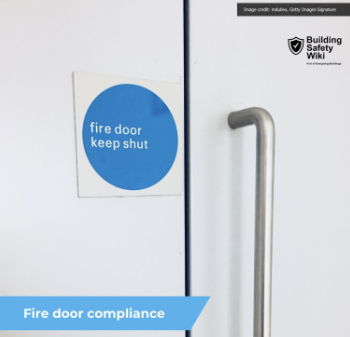
38% of Gen Zs feel safe when a fire door is wedged open.
Stunning images from around the world
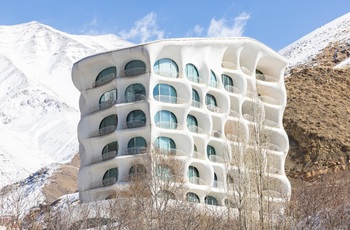
Shortlist for CIOB’s Art of Building photography competition.
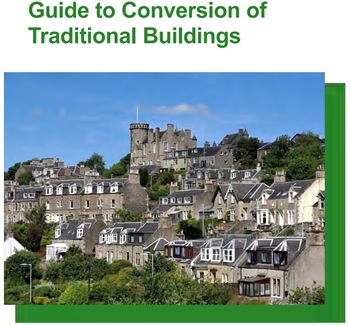
Guidance for conversion of traditional pre-1919 stone buildings.
Industrial heritage in the Ruhr
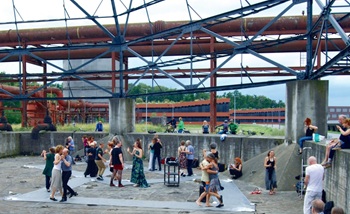
A marked difference to the fate of industrial landscapes in the UK.
Communities will be able to build their own clean energy.
Why diversity and inclusion matters for SMEs

CIOB’s D&I Charter shows how practical changes can support long-term growth.
Cut electricity bills to power growth

Coalition sends joint letter to the Chancellor.

Gasholders: a history in pictures. Book review.